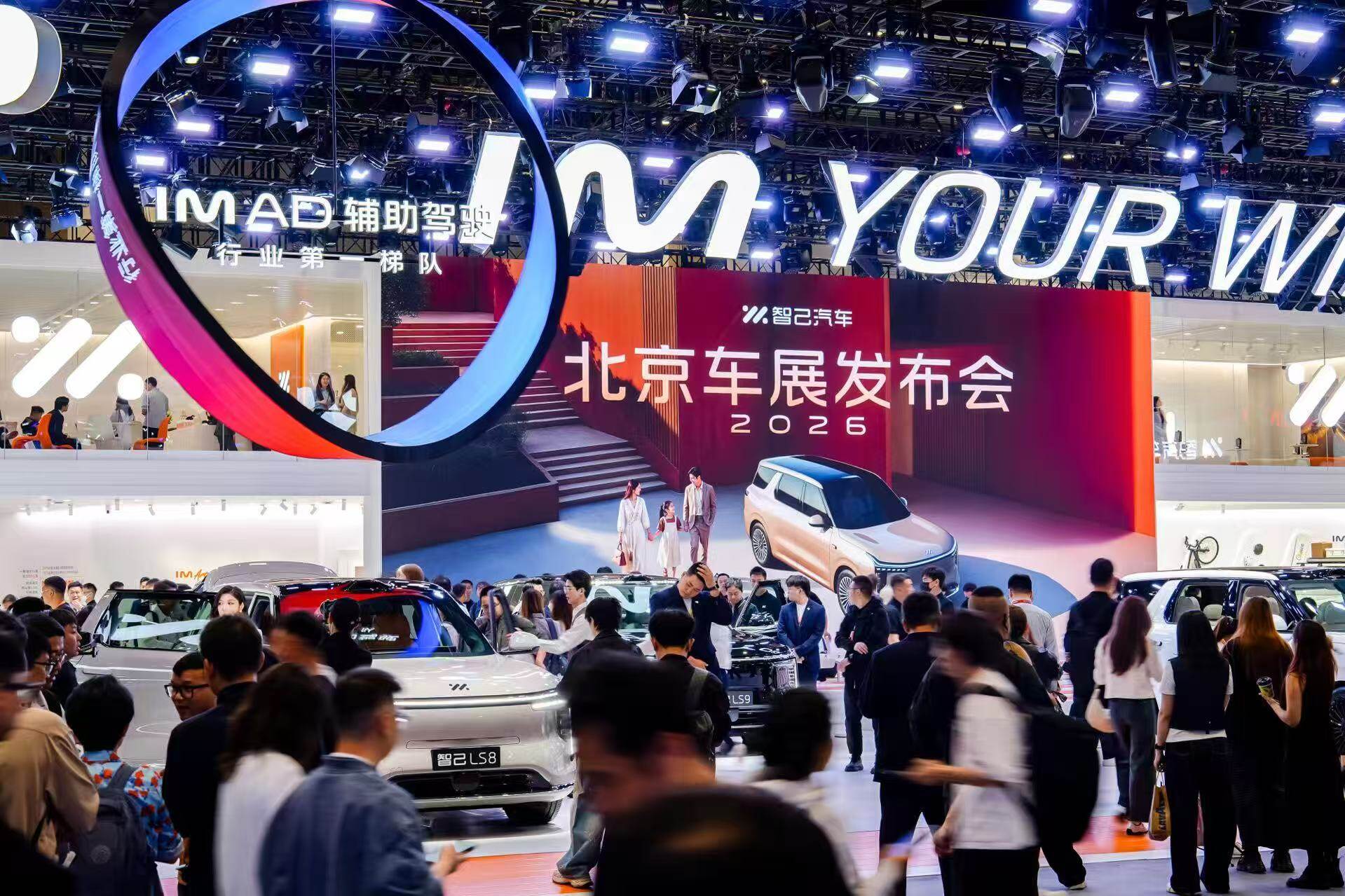
A decade of prosperity for China's auto industry: since 2020, annual exports have exceeded one million vehicles. This year, it is expected to surpass ten million—a historic milestone marking China's automotive renaissance.
Over the past decade, China's automotive industry has undergone a dramatic transformation, achieving historic leaps. From exploring "market for technology" to overtaking on the new energy track; from being dominated by joint ventures to the rise of domestic brands and their global expansion, China's auto sector completed its critical transition from a major car producer to a powerhouse in just ten years. This evolution was driven not only by innovation from market players but also by strategic national policies that provided precise guidance and empowerment. Every breakthrough at key milestones reflects the industry's firm commitment to transformation, while every implemented policy has injected powerful momentum into sector growth.
At the start of the decade, China's automotive industry remained stuck in a bottleneck: large in scale but not yet strong. Around 2014, although China had held the top spot globally for vehicle production and sales for consecutive years, it faced critical "chokepoint" challenges in core technologies. Key components for traditional internal combustion engines—such as engines and transmissions—relied heavily on imports. Domestic brands were largely confined to the mid-to-low-end segments, plagued by intense homogenized competition, while the premium market remained dominated by foreign manufacturers. At that time, the industry's primary objective was to break through technological barriers and optimize its industrial structure; precise policy interventions became the key lever to overcome these constraints.
In 2012, the State Council issued the "Planning for the Development of Energy-Saving and New Energy Vehicle Industries," establishing "pure electric drive" as its core strategic direction. This landmark policy marked China's automotive industry's pivot to new energy, setting a clear course for the next decade. Since then, the support framework has steadily matured. 2014 became the true turning point for market-driven growth in new energy vehicles, as national and local governments rolled out a series of supportive measures—including tax exemptions on vehicle purchases and direct financial subsidies. These policies lowered barriers to R&D and market adoption while igniting innovation across the sector. Guided by these initiatives, new automakers like XPeng and Li Auto emerged, while traditional giants such as BYD and Geely accelerated their transformation into new energy. China's new energy vehicle industry officially entered an era of scaled development.
Over the past decade, breakthroughs at key milestones have charted China's automotive industry comeback. From 2014 to 2023, annual production and sales of new energy vehicles in China surged from 7.85 million to 950 million units—a roughly 126-fold increase—marking a shift from "niche pilot programs" to "mainstream choice." In 2022, BYD surpassed FAW-Volkswagen for the first time to claim the top spot in national passenger vehicle sales, ending nearly 40 years of dominance by joint-venture brands. This milestone signaled that Chinese independent brands had officially seized market leadership and validated the correctness of the new energy transition path. In 2023, China's auto exports overtook Japan to become the world's largest auto-exporting country. By 2024, total annual production and sales had ranked first globally for nine consecutive years. The export model has evolved from "finished vehicle shipments" to "full value chain globalization," achieving comprehensive cross-border output in technology, production lines, brands, and standards—signaling China's true integration into the global automotive industry and its position at the core.
Policy iterations have kept pace with industry development, creating a complete closed loop of "guidance, support, regulation, and upgrade." During the early stages of the industry, fiscal subsidies and tax reductions addressed key challenges such as affordability and usability for electric vehicles (EVs), promoted charging infrastructure construction, and alleviated range anxiety. In 2019, the "Notice on Improving the Fiscal Subsidy Policy for EV Promotion" established a subsidy phase-out mechanism, compelling enterprises to shift from "policy dependence" to "technological innovation." This focus drove breakthroughs in core areas like battery-electric systems and intelligent connectivity, advancing the industry from quantitative growth to qualitative improvement.
The implementation and optimization of the Dual-Credit Policy have become a key driver for upgrading the automotive industry structure. By setting fuel consumption credit and new energy vehicle (NEV) credit requirements, the policy compels traditional automakers to accelerate energy-saving technology R&D while incentivizing greater investment in NEVs, propelling the sector toward green and low-carbon transformation. Additionally, policies such as the "Strategic Plan for Innovation and Development of Intelligent Vehicles" have clarified development goals for intelligent connected vehicles, fostering deep integration between the automotive industry and technologies like artificial intelligence, big data, and the Internet of Things. This has ushered in a new era of dual-track development—combining "new energy + intelligence"—and established new competitive advantages for China's automotive industry in areas such as autonomous driving and smart cockpits.
In a decade of remarkable turnaround, China's automotive industry has evolved beyond mere market expansion to achieve a comprehensive upgrade in core competitiveness. Once branded as "low-end" and "cheap," domestic automakers have now surged onto the global stage: BYD's Blade Battery and CATL's Qilin Battery are world-class; NIO's battery-swap model sets the industry standard; Geely's acquisition of Volvo enabled deep technological integration; and brands like Great Wall and Chery are building strong international presence. This transformation stems from policy-driven innovation, competitive iteration, and the unwavering spirit of Chinese automotive professionals—unyielding and bold in their pursuit of breakthroughs.
Of course. Behind a decade of brilliance, China's automotive industry faces significant challenges: gaps in core chips and high-end components, trade barriers and low brand recognition overseas, intensifying homogenized competition and price wars, and fierce technological rivalry in intelligence. Yet, looking back on ten years of progress, we are well-equipped to meet these challenges—sustained policy support, corporate innovation vitality, and a complete industrial chain advantage all provide the confidence to move forward.
Reflecting on the past decade, China's automotive industry has proven through practice that there is no "overtaking on a curve"—only precise efforts and relentless determination by market players under supportive policies. From 2014, when new energy vehicles began their market journey, to 2024, when the entire value chain went global, from relying on imported core technologies to leading the world with independent innovation, this decade has been one of breaking bottlenecks, filling gaps, transforming operations, improving quality and efficiency, and ultimately moving from following, to keeping pace, to leading the global industry.
At a new historical juncture, policy will focus on breakthroughs in core technologies, green and low-carbon development, and global market expansion—guiding China's automotive industry toward higher-end, smarter, and more international growth. In the future, China's automotive story will be one of technological innovation, brand rise, and a vibrant reflection of high-quality manufacturing development. This decade's remarkable turnaround is just the beginning; the next ten years will see the Chinese auto industry write an even more brilliant chapter.